
Have you ever wondered what the healthiest sleeping time really is? You’re not alone. In today’s busy world, sleep often takes a back seat to work, screens, and late-night scrolling — but your bedtime might be the single most powerful factor influencing your health, mood, and performance.
The truth is, when you sleep can be just as important as how long you sleep. Your body runs on a natural rhythm — the circadian rhythm — that affects everything from hormone production to body temperature. Aligning your sleep with this rhythm can help you wake up refreshed, think more clearly, and even improve your long-term well-being.
Let’s explore what science says about the healthiest sleeping time and how you can find yours.
What Is the Healthiest Sleeping Time?
Understanding Your Circadian Rhythm
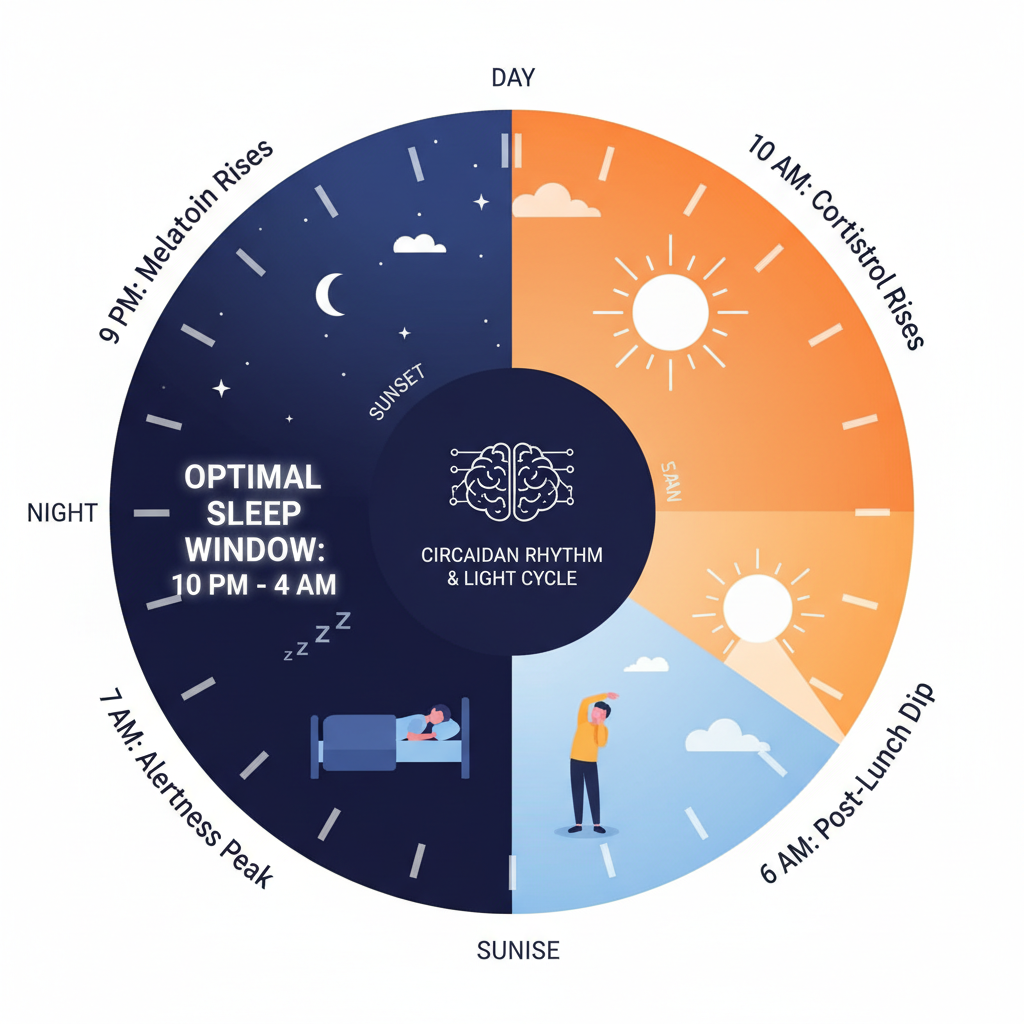
Your circadian rhythm is your body’s internal clock, controlling when you feel awake or sleepy. It’s influenced by light exposure, habits, and even genetics.
Most people’s bodies naturally prepare for sleep between 9:00 p.m. and 11:00 p.m. — when melatonin, the sleep hormone, starts to rise. Sleeping during this window helps your body enter deep, restorative sleep earlier in the night, when it’s most beneficial.
The Ideal Sleep Window for Most Adults
According to the National Sleep Foundation, the healthiest sleep window for most adults is between 10:00 p.m. and 6:00 a.m.
This aligns with natural light cycles, supporting optimal hormone balance, immune function, and mental alertness.
However, everyone’s “perfect” bedtime varies slightly depending on:
- Chronotype (whether you’re a morning lark or night owl)
- Work or school schedule
- Age and lifestyle
- Sleep quality and duration
👉 Tip: Use a tool like the Sleep Times Calculator to find the best sleep and wake-up times based on your natural sleep cycles.
Why Sleeping at the Right Time Matters
Sleeping at the right time supports more than just rest — it improves how your body functions daily.
1. Hormonal Balance
Your body repairs and regulates itself during deep sleep. Going to bed too late disrupts melatonin and cortisol balance, leading to fatigue, irritability, and even weight gain.
2. Better Brain Health
Early, consistent sleep improves memory consolidation, focus, and mental clarity — while chronic late nights are linked to brain fog and poor decision-making.
3. Heart and Immune Health
Studies show that going to bed around 10–11 p.m. lowers the risk of heart disease and strengthens your immune system.
(Sleep Foundation: Circadian Rhythm)
How to Find Your Healthiest Sleeping Time
Finding your best bedtime isn’t one-size-fits-all. Follow these steps to personalize your sleep schedule:
Step 1: Determine Your Wake-Up Time
Start with when you need to wake up. Work backward by about 7.5–9 hours (5–6 full sleep cycles).
- Example: If you wake up at 6:30 a.m., aim to sleep around 10:00–10:30 p.m.
Step 2: Account for Wind-Down Time
Most people take 15–20 minutes to fall asleep. Add that buffer before your target sleep time.
Step 3: Track How You Feel
Try a consistent bedtime for a week. If you wake up feeling groggy, adjust by 15–30 minutes earlier or later until you find your sweet spot.
(Use our Sleep Times Calculator to pinpoint your optimal bedtime.)
Actionable Tips for Healthier Sleep Timing
- Stick to the same bedtime and wake-up time every day — even weekends.
- Avoid screens at least 1 hour before bed.
- Get natural sunlight early in the morning to reset your circadian rhythm.
- Keep your bedroom cool, dark, and quiet.
- Avoid caffeine after 2 p.m.
- Try relaxation techniques like deep breathing or light stretching before bed.
FAQ: People Also Ask
Q1: Is sleeping early always better?
Not necessarily. The key is consistency and alignment with your personal rhythm — but generally, sleeping between 10 p.m. and midnight is best for most people.
Q2: How many hours of sleep is healthiest?
Most adults need 7–9 hours of sleep for optimal health. Quality matters as much as quantity.
Q3: What happens if I sleep late but get 8 hours?
You may still disrupt your body’s natural cycle, which can affect hormone balance, mood, and energy — even if you technically get enough sleep.
Q4: Does age affect the healthiest sleeping time?
Yes. Teenagers and young adults tend to have later circadian shifts, while older adults may feel sleepy earlier in the evening.
Conclusion: Find Your Healthiest Sleep Time Tonight
The healthiest sleeping time depends on your natural rhythm — but aiming to sleep between 10:00 p.m. and 6:00 a.m. is ideal for most people.
To fine-tune your schedule and wake up refreshed, use the Sleep Times Calculator to discover the best times to fall asleep or wake up based on your unique sleep cycles.
Start tonight — your body (and mind) will thank you tomorrow morning.